
Currently Empty: ₹0.00
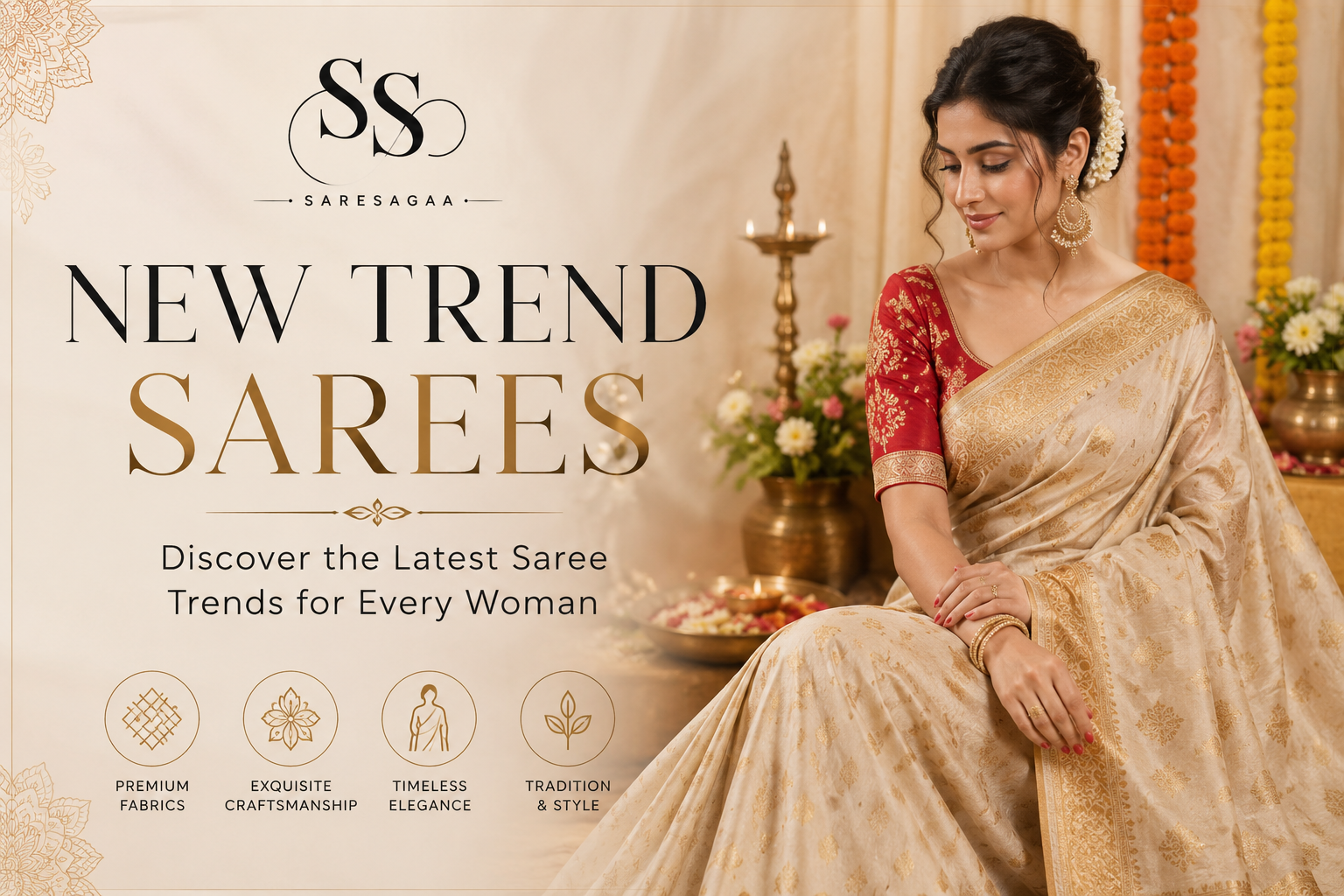
“What are you wearing for Karva Chauth?” Every single year, that message lands in the family group chat by early September. Someone’s aunt has already bought three New Trend Sarees. Someone else is still scrolling Instagram at midnight trying to decide between red and maroon. Sound familiar?
Here’s the thing — New Trend Sarees don’t really go “out of style.” They just shift. The blouse changes, the fabric gets lighter, someone brings back a trend your mother wore in the 90s and suddenly it’s “new” again. So instead of another generic list, let’s actually talk about what’s working right now, occasion by occasion.
Karva Chauth Sarees
Red is still the default. Probably always will be. But ask around and you’ll notice fewer women going for the exact same bright red their mother wore — there’s more range now.
Bandhani in red or maroon is still the safest bet, and honestly, there’s a reason it never dies out. It photographs well, it feels traditional without trying too hard, and most families already approve of it before you even ask.
Banarasi silk has been having a moment too. The zari does most of the talking here, so you can get away with less jewelry — which, if you’ve ever worn six bangles and a heavy necklace for four hours straight, you’ll appreciate.
If you’re the type who runs hot (and let’s be honest, Delhi in October is not exactly cool), organza with gota patti is worth a look. Lighter, breathes better, still festive enough.
And then there’s the pastel crowd — soft pink, beige, even a dusty lavender, paired with a heavy zari border. Not everyone wants to be the reddest person in the room, and that’s fine.
One thing I’d actually suggest: if the karva chauth saree already has heavy embroidery, don’t fight it with a loud blouse. Pick one thing to be the star.
Durga Puja Sarees
Talk to anyone from a Bengali household and Durga Puja sarees come with rules nobody wrote down but everybody follows.
White and red tant is basically mandatory for a lot of families. Ashtami anjali without Durga puja saree? Feels incomplete, somehow, even if you can’t quite explain why.
Jamdani gets a lot of wear during pandal hopping — makes sense, since you’re standing around for hours and it holds up. Baluchari silk is the one people save for Navami evening, mostly because those woven mythological scenes on the border deserve a moment where people actually notice them.
Kantha embroidery sarees are a bit more casual, more textured, less “formal event” and more “I still want to look festive but I’m not trying to outdo anyone.”
Red bindi, gold jewelry, flowers in the hair. That combination has survived decades of New Trend Sarees cycles for a reason — it just works.
Embroidery Sarees
This category never really slows down, and once you think about it, it makes sense why.
Zardozi is the heavy-hitter — rich, dense, built for weddings and big functions. Chikankari goes the opposite direction: light, breathable, works for a daytime event where you still want to look like you made an effort.
Mirror work brings movement and color, which is honestly perfect if there’s dancing involved at whatever function you’re headed to. Resham thread embroidery sits somewhere in the middle — detailed enough that people notice, subtle enough that you can wear it without it being “the wedding saree.”
What makes embroidery sarees genuinely useful is how far one good piece can stretch. Wear it to a puja in the afternoon, swap the jewelry, and it’s suddenly evening-appropriate too.
Festive Sarees
You don’t need ten new sarees this season. You really don’t. Three or four that cover different moods will get you through most of it.
A good festive saree doesn’t need to be loud to turn heads — sometimes the simplest drape says more than the heaviest zari ever could.
Silk with a temple border is the safe, always-appropriate option — the one you reach for when you’re not sure what the dress code even is. Georgette with sequin work is for evenings, parties, anything under lights where a little shimmer helps.
Printed cotton is underrated, honestly. Comfortable, breathable, and it doesn’t scream “I’m trying too hard” for a casual family gathering or a daytime pooja. And ombre sarees are the newer entry — the gradient does a lot of visual work even on an otherwise simple drape.
If there’s one styling trick worth stealing this season, it’s the blouse. Off-shoulder, high-neck, backless — women are experimenting a lot here, and it’s the easiest way to make an old saree feel new without spending on a new one.
Designer Sarees
The Designer saree is the category for when “traditional” isn’t quite the vibe you’re going for.
Pre-draped sarees exist for a real reason — not everyone wants to fight with pleats fifteen minutes before leaving the house, and there’s no shame in that. Ruffle sarees bring in a more Western silhouette, and you’ll see a lot of these at cocktail parties and receptions lately.
Cape-style sarees are for the friend who wants to look elegant at the sangeet without looking like everyone else in the room. And sequin or stonework sarees — those are basically built for photos. If there’s a red-carpet-style moment at the event, this is what you reach for.
Quick Reference: Which Saree for Which Occasion
| Occasion | Go-To Saree Style |
|---|---|
| Karva Chauth | Bandhani, Banarasi Silk, Organza with Gota Patti |
| Durga Puja | Tant, Jamdani, Baluchari |
| Wedding/Sangeet | Zardozi Embroidery, Ruffle Sarees |
| Daily Festive Wear | Printed Cotton, Chikankari |
| Party/Reception | Sequin Georgette, Cape-Style Sarees |
At the end of the day, the best New Trend Sarees isn’t the most expensive one hanging in your closet — it’s the one you can actually sit, eat, dance, and pose for photos in without adjusting it every five minutes. Everything else is just detail.
That’s the whole philosophy behind Sareesagaa, if we’re honest. We’re not chasing whatever’s trending this week just to chase it. We just want you to open your closet, pull something out, and feel good in it — no second-guessing, no readjusting the pallu every ten minutes.
FAQs On New Trend Sarees
Which saree is best for Karva Chauth?
Red and maroon Bandhani sarees are the classic choice. Banarasi silk is a close second if you want something with more richness.
What’s the traditional saree for Durga Puja?
White and red tant. It’s the one saree most Bengali households consider essential, especially for Ashtami.
Are embroidery sarees good for weddings?
Yes — Zardozi and mirror work sarees are built for exactly that kind of occasion.
What actually makes a saree “designer”?
Usually a non-traditional cut (ruffles, capes), premium fabric, and detailing you won’t find in a standard market saree.
How do I make a festive saree feel more modern?
Honestly, just change the blouse. That one swap does more than buying a whole new saree.
