Currently Empty: ₹0.00
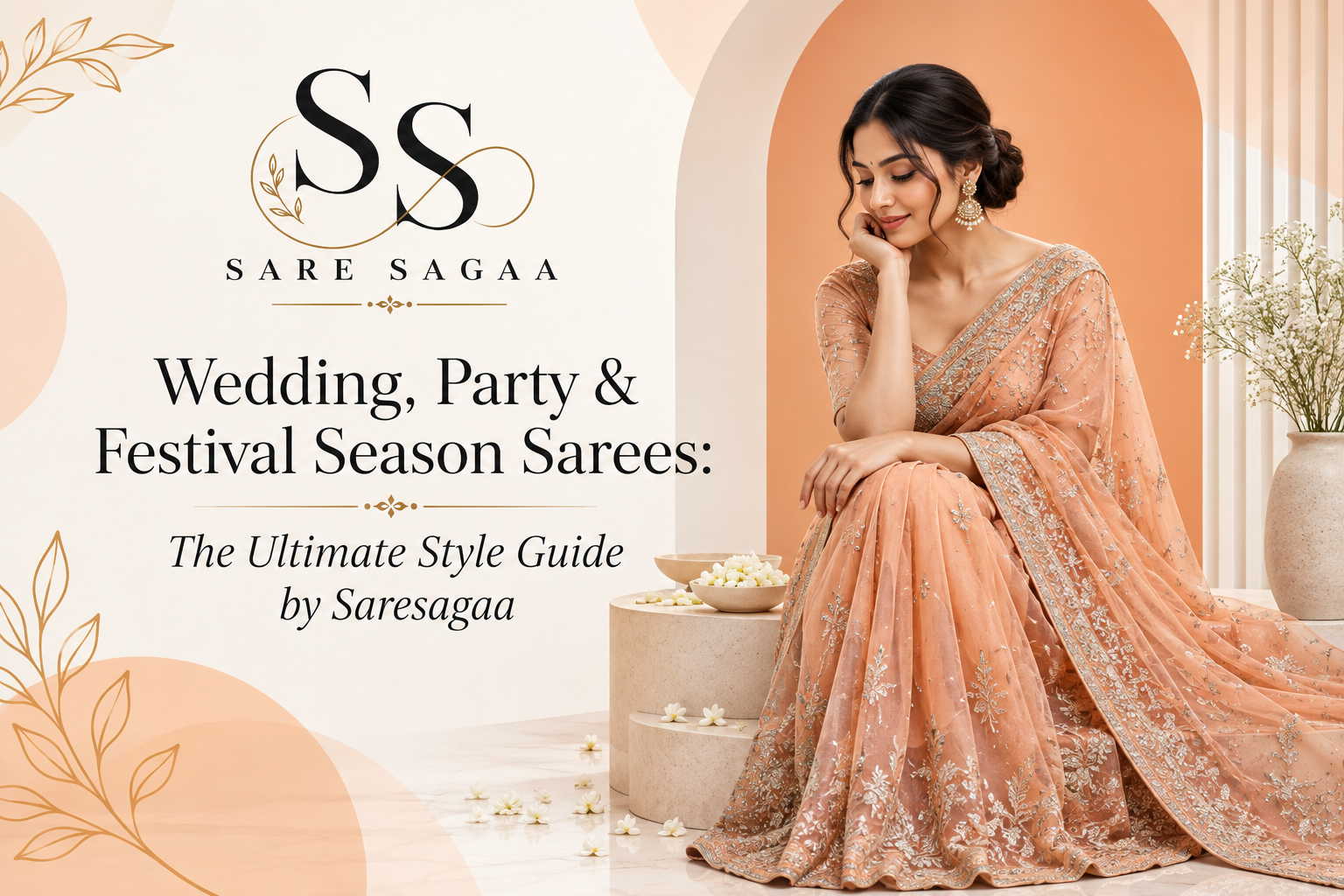
“What do I wear for the sangeet?” You’ve heard this question a hundred times if you’ve ever helped a bride shop, or run a saree store, or even just been the one friend everyone texts before a big function. It never gets easier to answer. That’s the whole reason Saresagaa exists, and it’s why designer sarees for wedding occasions get their own dedicated shelf in our collection, not just a corner of it.
Why Designer Sarees for Wedding Season Actually Matter ?
Let’s be honest. Nobody plans their wedding wardrobe two months ahead. It happens in a rush — one function announced, then another, then suddenly there are seven events in twelve days and you own exactly two sarees that work.
That’s the reality of an Indian wedding calendar. Diwali overlaps with engagement season. Karva Chauth lands right before someone’s sangeet. And every single time, the search for designer sarees for wedding shoots up, because a plain cotton drape that’s perfect for a Sunday lunch just doesn’t hold up under mandap lights or a hundred phone cameras.
A saree for a wedding needs weight, shine, a border that photographs well, and honestly — a bit of drama. That’s not vanity. That’s just what the occasion demands.
Embroidery Sarees: The Part Nobody Notices Until They Do
Good embroidery is quiet at first glance and impossible to ignore up close. Someone spent days, sometimes weeks, bent over that fabric with a needle. You can feel it the moment you touch the piece.
Zardozi work is the heaviest of the lot — gold thread, sequins, sometimes stones woven right in. It’s what the bride’s mother reaches for, or the mother-in-law who wants to look regal without trying too hard.
Resham is lighter. Softer too. Younger guests tend to gravitate here because it gives richness without the weight pulling on your shoulder all evening.
And then there’s aari — done with a hook instead of a needle, which sounds like a small detail but changes everything about the finish. Fine chain-stitch patterns, delicate from far away, stunning up close. If you’re building out designer embroidery sarees for wedding shoppers, embroidery pieces need to sit front and center. These are the ones people screenshot. These are the ones they send to their tailor with “can you copy this exact pattern?”
Festive Sarees: The Ones People Forget to Budget For
Here’s a mistake I see constantly. Someone shops for the big day and completely forgets the ten smaller events happening around it. Then three days before the wedding they’re scrambling for something to wear to the mehendi.
Festive sarees fill exactly that gap. Lighter than bridal pieces. Easier to move in. Priced so people actually buy two or three instead of agonizing over one.
A solid festive lineup usually covers a few bases —
Silk sarees with contrast borders, good for puja mornings and daytime events. Georgette or chiffon for evening cocktail parties, something that moves when you walk. And Banarasi weaves for the person who wants tradition on her sleeve but isn’t ready to go full bridal yet.
If someone’s attending five functions in ten days, festive sarees are what keep her from wearing the same thing twice.
Sequence Sarees: Built for the Dance Floor
Say “sequence saree” near a bride’s best friend and watch her face change. These pieces exist for one purpose — to catch light and hold it. Sangeet nights, receptions, anywhere there’s a dance floor and a hundred phone flashes going off — this is where sequins win.
A few things worth knowing if you’re buying or stocking these. Pair heavy sequin work with a plain blouse. Two loud elements on one outfit just cancel each other out. Darker bases — navy, wine, black — make sequins pop harder than pastels ever will. And go light on jewellery. The saree’s already doing all the talking; don’t make it compete with a chunky necklace.
These sell fast, and they sell in a very narrow window — roughly the two weeks before the wedding date. Miss that window with your stock and you’re sitting on inventory till next season.
Matching the Saree to the Occasion
Not every event needs the same intensity, and figuring that out ahead of time saves a lot of last-minute stress.
Rough guide, based on what actually works —
Engagement calls for light embroidery or a soft pastel silk.
Sangeet wants shimmer or sequins, something that moves with you.
The wedding day itself is where the heavy zardozi or a classic Banarasi earns its place.
Reception leans back toward sequins or something more contemporary.
And for Diwali or a puja, a festive silk with a traditional border does the job every time.
Anyone browsing designer sarees for wedding functions is usually trying to solve exactly this puzzle in their head. Lay it out for them clearly and you save them an hour of scrolling through fifty near-identical products.
A Few Practical Things to Keep in Mind
Blouse stitching takes time — always check this before promising a delivery date close to the wedding. If someone’s going to be dancing or standing for hours, ask about fabric weight before they commit to something heavy. Show pallu draping clearly in your photos; it’s the first thing most people judge. And keep a handful of ready-to-ship pieces on hand, because wedding shopping is almost never planned as early as it should be.
Wrapping This Up
Wedding season moves fast, and it doesn’t wait around for anyone to catch up. Whether it’s the quiet detail of embroidery, the everyday usefulness of festive sarees, or the sparkle of sequins on a dance floor, each piece has its own moment somewhere in the celebration. Build the Saresagaa collection around what people are actually living through that season — not just what’s trending — and the right designer sarees for wedding shoppers will keep finding their way back to you, function after function.
